Undercroft Deckbuilder Roguelike Runs Guide: What Happens During a Descent
What a descent looks like in Undercroft: Deckbuilder Roguelike, floor by floor: the hero pick, the fights and rewards, the events, chests, merchant and bosses between floors, and how your choices carry a run to the bottom.
Quick answer
A descent is one full run down through Undercroft: Deckbuilder Roguelike. You pick a hero, then descend floor by floor — fighting card battles and choosing between events, chests, a merchant, an Elite, Challenges and bosses — until you reach whatever waits at the bottom past 30 bosses. When you leave, the run is saved and you can continue it any time.
- Runs are co-op for 1–4 players and start with a hero pick before the first floor.
- Each floor offers fights plus decision points: costed events, an upgrade spot, chests, the merchant, an Elite, a Challenge or a boss.
- Rewards feed the run itself — card copies join your deck, chests open into relics, and events can pay out gold.
- Every descent is different, and every one ends with something waiting at the bottom.
A descent is Undercroft's name for a complete run: you pick a path downward and follow it to the bottom. Along the way, the game hands you a steady stream of decisions — some cost max HP, HP or cards, while others pay out gold, relics and new cards — and those decisions are what shape the deck you fight with.
This page walks through a descent in the order you'll meet it: how a run starts, the floor-by-floor loop it follows, the choices that appear between fights, and how the whole thing ends. It also covers what happens if you stop playing halfway down.
What a descent is
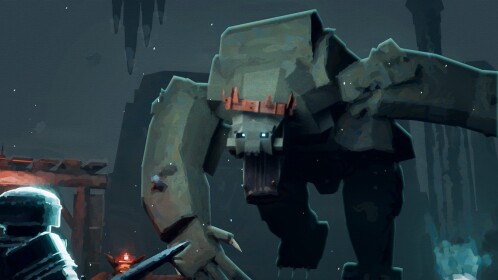
Three things frame every run. A descent goes down: you pick a path past 30 bosses guarding the way down. Every descent is different, so the stops and offers you meet change between attempts — a run is a string of fresh decisions rather than a memorized floor plan. And a descent does not have to happen in one sitting: when you leave, your run is saved, and you can continue it any time.
Starting a run: pick a hero, solo or with friends
A descent is a co-op card roguelike for 1–4 players, inspired by Slay The Spire 2 according to the official page, so you can run it solo or bring up to three friends along — the playing with friends guide covers the co-op setup. Before the floors start, you pick a hero: one solo run chose the knight and played the entire descent with them.
That choice reaches further than the first fight, because everything you win, buy and transform during the run feeds the deck you take into battle. The game advertises 5 heroes and 300+ cards; the heroes guide breaks down the hero options, and the combat guide explains how the card battles themselves play out.
The floor-by-floor loop
The run itself proceeds floor by floor: fight card-battle encounters, win rewards — card copies for your deck, relics, gold — then move down to the next floor, where a new set of choices appears.
One pass down a floor
Move down a floor
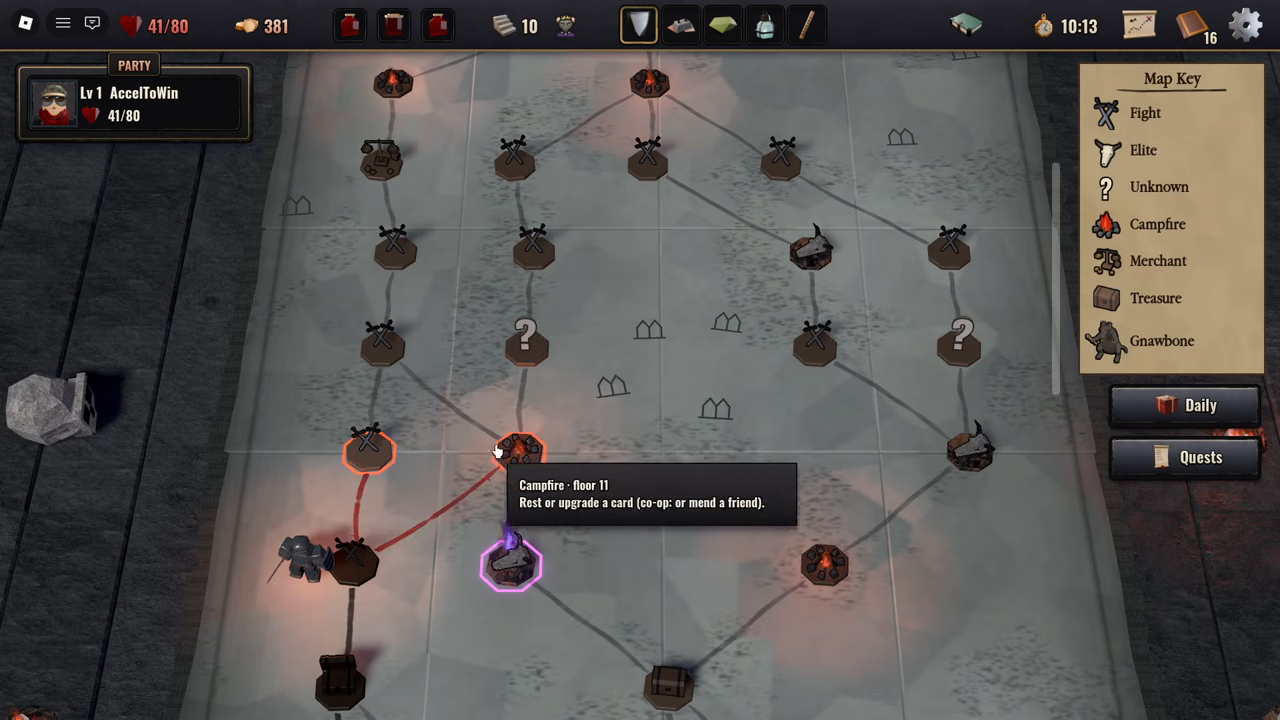
Each floor brings a fresh mix of stops — card-battle encounters alongside decision points like events, a chest, the merchant, an Elite or a Challenge.
Choose what to take on
The options are offers, not obligations. Events carry a cost, so each one is a trade to weigh rather than free loot.
Fight or pay the price
Encounters are card battles fought with the deck you've built; event swaps hand over max HP, HP or cards in exchange for gold and other gains.
Take the reward
Winning a fight can add a copy of a card to your deck, chests open into relics, and the merchant sells relics and other items.
Each pass ends one floor lower, with the deck you've been building traveling with you — the loop repeats floor by floor until the descent reaches whatever waits at the bottom.
What varies
Every descent is different, so treat the loop as the repeatable shape of a run — the exact stops on any given floor aren't set in stone.
One solo knight run shows the rhythm in practice: it moved from a fight won for a card copy, down through an event stop where a card was transformed, an Elite encounter, a Challenge trade, a merchant visit, an upgrade taken, and on into the fight with the rat king — the stretch where that same run also cracked a chest open into relics. Treat that as one descent's route rather than a fixed order — the loop's shape repeats, but the stops along it vary.
The choices that move you down
Fights move you down a floor when you win them. The other half of a descent is the decision points between fights — these are the stops that shape the run:
The stops between fights
Event choices
Costed swaps presented as a list. Examples from one run: lose 4 max HP for gold, burn away a card, lose 6 HP to transform a card, or remove a card outright.
Upgrade a card
Improves a card in your deck — in one run, an upgrade stripped an attack's cost entirely, turning it into a free card.
Challenge
A higher-stakes trade. The Challenge seen in one run cost 2 block HP and paid back 16 block.
Chests
Open straight into relics — one run's chests turned up the Soul Jar and the Hunter's Tally in the rat-king stretch at the end.
Merchant
Sells relics and other items during the run — one descent's player stopped in to look over a new relic partway down.
Elite
An encounter type met during a descent; in one run, an Elite appeared partway down the route.
Boss
The guardians of the descent: 30 bosses watch the way down, and a run's final stretch leads into one of them.
Two things are worth keeping in mind at these stops.
You don't have to take everything. These options are offers, not obligations — in one run, the player weighed an event's list, took a single option and passed on the rest. Because events carry real costs (max HP, HP, or a card from your deck), the question at each node is simply whether the price is worth paying on this particular run.
The deck is built along the way. Winning fights can add a copy of a card to your deck; events transform or remove cards; the upgrade option strengthens a card you already own. Chests and the merchant work the same stretch of the run from the other side, adding relics and items rather than cards. All of it happens mid-descent — the deckbuilding guide goes deeper on steering it, and the cards list shows what exists among the game's 300+ cards.
The end of the line
Every descent ends with something waiting at the bottom, and the way down is guarded by those 30 bosses. In the solo knight run above, the final stretch led into a battle against the rat king. Whatever an individual descent has been building toward, the bottom is where it gets settled — the bosses guide covers those fights in detail.
Leaving mid-descent
A run doesn't lock you into a single session. When you leave, your descent is saved, and you can continue it any time — the saving progress guide covers the controls in detail.
Related Guides
Paths Guide
Understand the route options each floor shows, how picking works, and what node types did in an observed run.
Deckbuilding Guide
See where each deck change happens in a run, what add, remove, transform and upgrade offers cost, and which are worth taking.
Bosses Guide
See which bosses the official 30-boss listing confirms and what a recorded Rat King fight reveals.
Run Saving
Confirm your descent is saved automatically when you leave, and how continuing a run later works.